
Introduction
Think about how you contact a business today. You probably do not want to wait on hold or send an email and hope for a reply in two days. You open WhatsApp, type a question, and expect an answer while you are still holding the phone.
That habit has reshaped what customers expect from every brand, from a neighbourhood pharmacy to a national bank. Communication is no longer a broadcast from company to customer. It is a conversation, and it happens in the apps people already use with friends and family.
What Has Changed
Smartphones and affordable data have made messaging apps the default way many Indians communicate. Customers now compare every brand interaction with the ease of chatting with a friend: instant, informal, and on their own schedule.
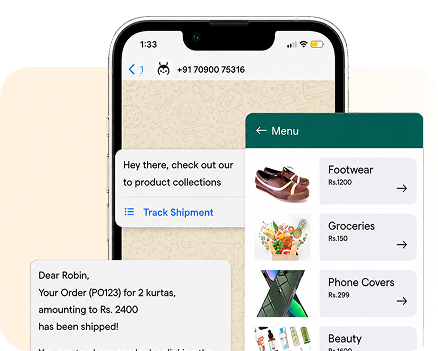
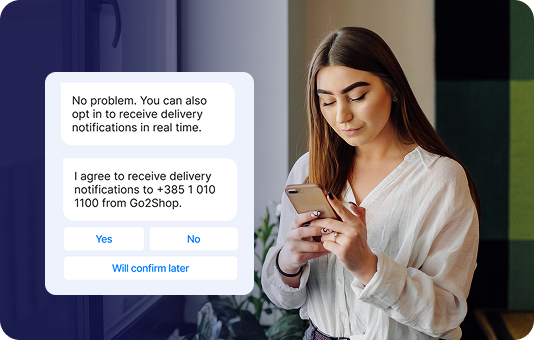
Business messaging has caught up. The WhatsApp Business Platform lets companies send order updates, answer queries, and share catalogues inside the chat. RCS brings branded, verified messages with images and buttons to the default messaging app on Android phones. Both turn a plain notification into something customers can act on immediately.
Where Traditional Channels Fall Short
Traditional channels still matter, but each has limits when customers expect a quick, two-way exchange:
- Call centres are personal but expensive to scale, and long queues during peak seasons frustrate customers.
- Email works well for detailed documents and statements, but it is slow for urgent questions and often ends up unread.
- Plain SMS is fast and reaches every phone, which makes it ideal for OTPs and alerts, but it is text-only and mostly one-way.
None of these channels is going away. The problem appears when a brand relies on only one of them and asks customers to adapt, rather than meeting them where they already are.
What a Modern Communication Stack Looks Like
Leading brands now combine channels, choosing each one for the job it does best:
- WhatsApp for conversations, support, order tracking, and re-engagement, using Meta-approved templates to start chats and free-form replies within the 24-hour customer service window.
- RCS for rich, branded messages with a verified sender, carousels, and suggested replies, with automatic fallback to SMS when a phone does not support it.
- SMS for OTPs, payment and UPI alerts, and critical notifications that must reach every handset.
- Voice for urgent confirmations, IVR, and conversations that still need a human voice.
- Email for invoices, statements, and longer content customers want to keep.
The key is coordination. A customer who has just chatted with support on WhatsApp should not receive an unrelated promotional SMS ten minutes later. Shared customer data and a single view of every channel make that possible.
How to Make the Shift Without Starting Over
You do not need to rebuild your customer communication overnight. Start with one high-volume journey, such as order updates or appointment reminders, and move it to WhatsApp or RCS while keeping SMS as the fallback. Measure response and resolution times, learn from customer replies, then expand to support and marketing.
Plan for regional languages early. Customers respond more readily when a message reads naturally in their own language, and both WhatsApp templates and SMS support Indian scripts.
Finally, prepare your team. Conversations create replies, and replies need owners. Decide which questions a chatbot will answer, when a chat moves to a human agent, and how quickly your team should respond during business hours. Customers notice the difference between a brand that answers in minutes and one that leaves them on “seen”.
Conclusion
The new era of customer communication is conversational, rich, and instant. Brands that answer quickly in familiar apps build trust, while those that rely on slow, one-way channels risk being ignored.
Growtele helps you make the move at your own pace, with SMS, WhatsApp, RCS, Voice, and Email available from one dashboard and simple APIs to connect the systems you already use.
See how Growtele runs OTPs, alerts, and campaigns reliably at any daily volume.